Failed payments are the #1 cause of B2C involuntary churn.
The invisible leak
Up to 15% of renewals fail because of preventable technical errors or temporary card issues. Redux finds the revenue that would otherwise slip through the cracks.
The B2C blindspot
Standard recovery tools are too rigid for B2C. Redux accounts for consumer nuances like payday cycles, card behavior, and local banking patterns.
Permanent LTV loss
A failed payment is the permanent end of a customer relationship, wiping out years of potential lifetime value and the original cost of acquisition.
How Redux fixes involuntary churn without adding work to your team.
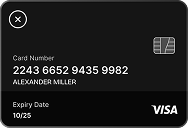
Payment Failed
The moment a card is declined, Redux instantly analyzes the failure code, issuer metadata and 100+ signals to understand the "why."
Recovery Plan
Redux builds a personalized recovery plan for every subscriber, then retries only when approval is most likely.
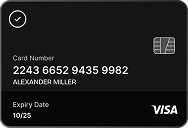
Payment Recovered
Redux recovers revenue silently whenever possible, keeping subscribers active without an email. When customer action is needed, Redux moves into Active Recovery.
Customer Rebilled
The customer stays active and gets rebilled in future months. Redux protects the LTV that would have been lost to a preventable payment failure.
Key features.
The AI recovery agent built exclusively for B2C subscription payments.
B2C-first specialization
Optimized for high-volume consumer subscriptions, card types, and regional bank behaviors that generic tools overlook.
Continuous ML optimization
Our engine analyzes millions of transactions to adapt to global banking shifts in real-time, increasing success rates with every retry.
Silent-first recovery
Redux tries to recover failed payments silently first, protecting the customer experience by involving subscribers only when action is required.
Adaptive global intelligence
Navigate international growth with an engine that understands the specific decline patterns of banks across the US, EU, and LATAM.
Plug and play.
No complex migrations. Add Redux to Stripe in minutes and let it start recovering.
Redux analyzes over 100+ data points for every transaction. It looks at the reason for the decline, the card issuer’s historical behavior, and external factors like local time zones and payday cycles to find the exact moment banks are mostly likely to approve that transaction.
How does machine learning improve on standard retry logic?
Standard systems use fixed intervals that ignore why a payment failed in the first place. Redux analyzes the specific decline code and card brand to determine if the failure is temporary, like a daily spending limit, or permanent, like a lost card. It then adjusts the strategy in real time to maximize the chance of a successful future attempt.
Does the Redux AI Agent learn over time?
Yes. Every success and failure is fed back into our models. This allows Redux to adapt to changing banking regulations and consumer habits in real-time, ensuring your recovery rates improve as your business scales.
What exactly is "Silent Recovery"?
Silent Recovery means Redux resolves the payment failure without the customer needing to take action. This keeps the experience frictionless and saves “update your card” emails for when they are actually necessary.
Is Redux better than sending dunning emails?
Emails should be your last resort. Outreach requires a customer to take manual action, which often leads to unnecessary friction or the user simply forgetting to update their details. Redux focus on recovering the revenue silently first, only involving the customer if it cannot resolve the issue on its own.
How does Redux differ from Stripe’s built-in "Smart Retries"?
Stripe Smart Retries follows retry logic. Redux is an AI recovery agent. It analyzes each failed payment, decides whether recovery is possible, chooses the next best action, and keeps optimizing from every outcome. Instead of just retrying cards on a schedule, Redux works the failure until it is recovered.
How long does integration take?
Integration is plug and play. Since Redux sits inside Stripe, setup typically takes less than 30 minutes and requires zero complex engineering. You can read our full quickstart guide.
What is the difference between active and passive churn?
Active churn occurs when a customer manually chooses to cancel. Passive or involuntary churn happens when a customer wants to stay subscribed but their payment fails due to technical errors or card issues. Redux is built specifically to eliminate this passive revenue leak.
.png)


.png)
.png)


.png)

.png)
.png)


.svg)


.png)

.png)